
Every Richmond resident from Forest Hill to Westover Hills knows the 2 a.m. version of summer: awake, sweating, wondering why you chose to live inside a slow cooker from June through September.
The sleep-tech industry has noticed your suffering, and it has expensive opinions about it.
There's a second thing keeping people up these days, though: the power bill. Electricity prices in Virginia have been in the news all year, mostly because of the data-center boom. So this article is about two things at once. How to sleep cooler, and how to spend less running your house all summer.
The Cool Kids of Sleep Tech
Active bed temperature systems have gone from novelty to a real product category in a few years. They range from clever to impressive to "wait, how much?"
8Sleep Pod
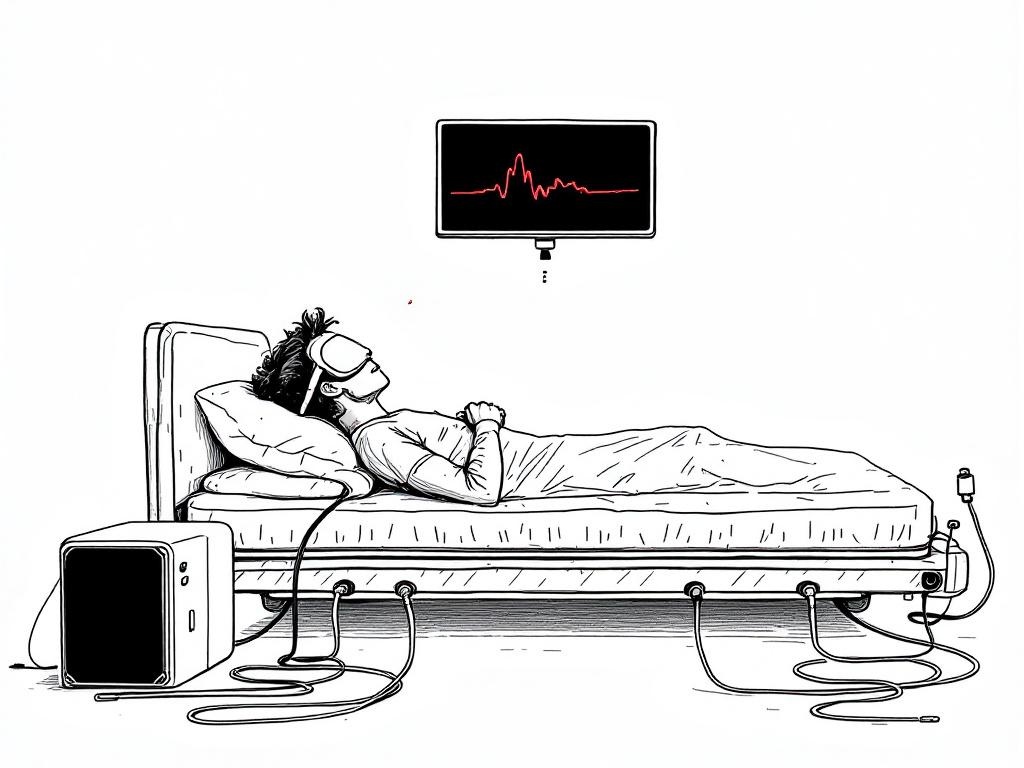
The 8Sleep Pod is a smart mattress cover connected to a hub about the size of a carry-on bag. The cover is laced with thin water tubes; the hub chills or warms the water and pumps it through all night. It tracks your heart rate, breathing and sleep cycles, and adjusts the temperature for you.
Both sides of the bed can be controlled independently; that's a genuinely useful feature if you and your partner run at different temperatures. The price is seriously eye-popping, though. The Pod 5 starts at $2,949 for a queen. The Pod 5 Ultra (which adds built-in speakers and a motorized base) tops out at $5,899. On top of that, the company dares to charge you about $17/month for the AI features.
Orion Sleep System
Given that some people will shell out that kind of money to solve their sleep temperature problem, new competitors are clearly eager to enter the same market. The latest seems to be the Orion Sleep System. It's a close cousin of the 8Sleep Pod: a smart cover that goes over the mattress you already own, laced with water tubing, fed by a hub that tucks under the bed. Two independently controlled zones, app-driven, with a claimed range of roughly 50°F to 115°F.
What sets it apart from 8Sleep is that the subscription is optional. Sleep tracking and the biometric graphs are an add-on called Orion Intelligence at around $250/year, but the cooling itself works out of the box. That's a better deal structure than paying every month to keep features you already bought.
The price is still the price, though: roughly $2,095 to $2,295 for a queen, more for a king. Reviewers put the real-world all-in cost near $2,500. That is a lot of money to make one piece of furniture colder.
Want to see one in action before spending it? WheezyWaiter tested the Orion for a week and made a very entertaining video about it: "I Tested a Sleep Temperature System for a Week, Here's What Happened." It's a sponsored review, he says so up front, and there's a discount code, so weigh the enthusiasm accordingly. It's still the best way to understand what you'd be signing up for: the unboxing, the fill procedure, where the hub lives, what the cover feels like, all in his usual deeply irreverent style.
Read the comments too. They're worth as much as the video.
ChiliPad / Chili Sleep
Same water-circulation principle, none of the AI flourishes. The current top model is the Dock Pro, since the popular OOLER was discontinued in late 2023, and it runs from $500 to over $1,000 depending on size and whether you want dual zones. Solid tech at a more approachable price, though "approachable" is doing some work at $999 for a queen.
BedJet
BedJet blows air instead of circulating water. A quiet unit on the floor pushes room-temperature air up into a special fitted sheet, the "Cloud Sheet," which spreads it across the bed.
Worth understanding before you buy: BedJet does not cool the air. It moves your bedroom's air into the bed, and the difference between room air and your overheated body does the actual work.
At $599, plus $99 for the Cloud Sheet, it's the cheapest of the bunch, and quite effective for people whose real enemy is trapped heat and moisture rather than a hot room. Some owners also love it in winter, when it feels like a warm hair dryer under the sheets.
Why Richmond Summers Make This a Real Problem
Richmond is not subtle about its summers. Mid-to-upper 80s with humidity that makes the walk to the car feel twice as long as it is. July and August routinely hit 90°F and up, with dew points that turn the air into warm soup.
Without AC, indoor temperatures can easily sit in the mid-80s overnight, and the optimal range for good sleep is 60 to 67°F, about 15 to 19°C. That's not a preference, it's physiology: your core temperature drops as you fall asleep, and a cool room helps that along while a warm room fights it. Peer-reviewed research finds that even a modest rise, from 77°F to 86°F, measurably cuts slow-wave sleep, the deep restorative kind.
The Winter Plot Twist
Product ROI gets complicated here, because the winter of 2025-2026 reminded us that Richmond can also get very cold. The polar vortex, that swirling mass of Arctic air usually pinned over the North Pole, wobbled badly in early 2026, and when it weakens, Arctic cold escapes south.
Climate scientists expect more of this. The Arctic is warming roughly twice as fast as the rest of the planet, which weakens the temperature contrast that normally keeps the vortex spinning strong. A wobblier vortex means more frequent cold-air outbreaks (yes, it's strange that a warming planet delivers colder Februaries), broken up by milder stretches driven by La Niña patterns that push warmer air into the Southeast.

What you get is not a predictably cold winter but a chaotic one: a mild week, then a brutal freeze, then 60°F in February. Richmond winters are real enough that you don't want to optimize purely for summer cooling.
The Winter Counterargument
But should you buy a bed climate system for warmth as well as cold? Probably not. In cold weather the solution is to add covers. Electric blankets run $30 to $80 and work brilliantly. An old-fashioned hot water bottle costs $15 and lasts a decade. Even a quality heated mattress pad tops out around $150. For warmth, the cheap methods work better and last longer.
Back to the hard problem: bedroom heat in the summer.
The $150 Solution
If you crave hotel-room cold at home in summer, say 65°F while you sleep, the most cost-effective path is a window air conditioner.
Not glamorous. But a basic 5,000 to 8,000 BTU unit costs $150 to $250 and will take a typical bedroom down to whatever temperature you want. If cooling one bedroom at night is all you need, that's the whole problem solved.
If noise bothers you, inverter units like the Midea U-Shaped series run as low as 32 decibels, because their variable-speed compressors modulate instead of cycling on and off with a clunk. Those run $250 to $350, still a fraction of a ChiliPad.
A window unit in the bedroom window wins no design awards, and plenty of people associate them with low-end housing. As a solution, though, it's hard to beat. It pays for itself quickly, and it gives you a cold room to retreat to if your main A/C dies, which buys you time to shop around instead of paying for an after-hours HVAC call.
And this is where the power bill comes in
We live in a time when keeping a whole house cold in August can easily run a $300 power bill. That changes the equation compared with a decade or two ago, when nobody thought much about it.
It's about to change further. Virginia is data-center country now, and the electricity those buildings need has to come from somewhere. Rate increases, grid-capacity warnings, and arguments over who pays for the new transmission lines have been steady news all year. Whatever the outcome, nobody sensible is betting on cheaper power in 2027.
Which is the quiet argument for the window unit that has nothing to do with sleep tech: cooling one bedroom to 65°F costs a fraction of cooling an entire house to 72°F. A central system chills your kitchen, your hallway, your guest room and the attic stairs all night long so that one human can be comfortable in one bed. A window unit cools the room with the human in it.
The usual move is to nudge the thermostat up several degrees overnight, to 76°F or 78°F or whatever you can stand in the rest of the house, and let the bedroom unit do the one job that matters at 2 a.m. People often find the window unit pays for itself over a summer or two just from that. You're not adding an appliance to your bill so much as reassigning the work to a much smaller one.
The math:
- 8Sleep Pod 5 (queen): $2,949 plus about $204/year, and your cooling bill doesn't drop at all, because the room still needs cooling
- Orion Sleep System (queen): about $2,095 to $2,295, no required subscription, but the same catch: it chills the bed, not the room, so the house still runs its A/C
- Midea U-Shaped inverter (8,000 BTU): about $350 (less if on sale; buy at the end of the season!), no subscription, cools the whole room, and lets you back the central A/C off overnight
If what you want is a properly cold room rather than a cold mattress, the window unit wins the job, not just the price comparison.
One important gotcha, though...
Pulling heat out of the air also pulls water out of the air, and that water has to go somewhere. Every one of these machines has a plan for the water. The plan is just not always a good one, and it's almost never explained on the front of the box.
Broadly, there are three plans:
- Evaporative, sold as "no drain needed." The unit slings condensate onto the hot coil and evaporates it back out the window. Most modern window units work this way, and most of the time it works beautifully.
- A drain hose or plug. The unit expects you to attach a hose, or to tilt it slightly so water runs out the back. Common on portable units and older window units.
- A bucket or tank you empty yourself. Standard on dehumidifiers and many portable A/Cs, with a float switch that shuts the unit off when it's full. Usually.
The first one is the trap, because "no drain needed" reads like "no water involved." What it means is that the unit can evaporate the water it makes under normal conditions, and Richmond specializes in conditions that are not normal. You'll run a window unit happily for six weeks, and then the dew point parks at 75°F for four days running and the air is essentially soup. Suddenly the unit is condensing water faster than it can throw it back outside, and it starts finding other exits: a steady drip down the interior wall, a puddle under the front lip, water tracking along the windowsill and down into the floor. Portable A/Cs are worse about this than window units. Dehumidifiers by design yield the most water from the air, but tend to have a solid mechanism to keep them from leaking or overflowing.
What to do
1. Read the whole manual, including the boring parts. Not the quick-start card, the actual manual. Look for whether it needs a drain hose, whether it needs a slight tilt toward the outside, whether there's a plug you're supposed to remove or leave in, whether there's a tank, and what the maintenance section says. Filters clog. A clogged filter ices the coil, and when the ice melts it melts all at once, and not into the drain pan. Most manuals want that filter rinsed every two to four weeks in heavy use. If you bought a reconditioned unit, expect that there might be gunk in the machine... and a water spill might've been the very reason the unit was returned.
2. Buy a rubber mat with a raised lip. This is the best $10 to $20 you'll spend on the whole project. The flexible rubber or silicone trays sold as under-sink cabinet liners, dog-bowl mats or boot trays all work; what matters is a raised edge all the way around, so the thing is a shallow tray rather than a flat sheet. Put a portable unit or dehumidifier directly on it. For a window unit, put it on the floor under the interior face, where drips land. A tray that catches a pint of water is the difference between "huh, that's dripping water" and a warped floor.
3. If you have a floor worth protecting, add a $10 to $15 water alarm. These are the little battery-powered pucks sold for water heaters and washing machines; they sit flat and shriek when their two contacts get wet. Put one inside the mat. On hardwood, engineered floors, or anything over a finished ceiling, $15 is cheap insurance.
4. Keep absorbent things away from it. Rugs, laundry baskets, cardboard boxes of photos, the guitar case, the laptop you're charging. Give the unit a couple of feet of clear, wipeable floor, just in case
5. Check on it during humid spells. Not obsessively, but when we hit a run of 100%-humidity days, that's the week to check it every once in a while.
None of this makes a window unit a bad idea. It's still the cheapest good answer to a hot bedroom, and with a bit of foresight, water damage problems are easy to avoid. And getting the water out of the Richmond swamp air to create a nice, dry, California-style climate is worth it, and beats any $2500 sleep system in my book.
The Other Purchase Worth Making: One Strong Fan
While we're on cheap solutions that punch above their price: buy one really good standing fan. Not the $18 wobbly one. A solid pedestal or tower fan in the $60 to $100 range, with real airflow and a motor that doesn't grind.
I keep finding new jobs for mine:
- Cooling the house down fast when the heat wave finally breaks. This is the big one. Richmond gives you evenings that drop to 68°F outside while your house is still holding 80°F from three days of baking. Open windows on two sides, point a strong fan out one of them, and you flush the whole house in half an hour. No A/C does this as cheaply.
- Moving the cold air around. A window unit cools its own room. A fan in the doorway, aimed out into the hallway, spreads that cold into the rest of the house. That's how one $300 window unit covers a bedroom and an office instead of you buying a second unit.
- Mosquitoes on the porch. Mosquitoes are terrible fliers. A decent fan aimed across the seating area makes the porch unusable for them and lovely for you. No candles, no spray, no zapper. Might be a good reason for buying a cordless, rechargeable fan type.
- The cooking mishap. Whatever happened in that pan, a strong fan in the window clears the house in fifteen minutes.
- After painting, after the cat's accident, after anything. Air movement solves a surprising share of household problems.
Moving air also makes you feel several degrees cooler when the thermometer hasn't moved, which is a nice trick on a budget. A fan running all night costs pennies; a compressor costs real money. During a power outage you might be able to run it on a battery with an inverter, a solar panel, or a generator.
One Practical Note on Installation
Installing a window unit isn't hard, but for most windows it really is a two-person job. The units are heavier than they look, 35 to 50 lbs, slightly awkward to position, and you want someone steadying it while you get the side panels secured.
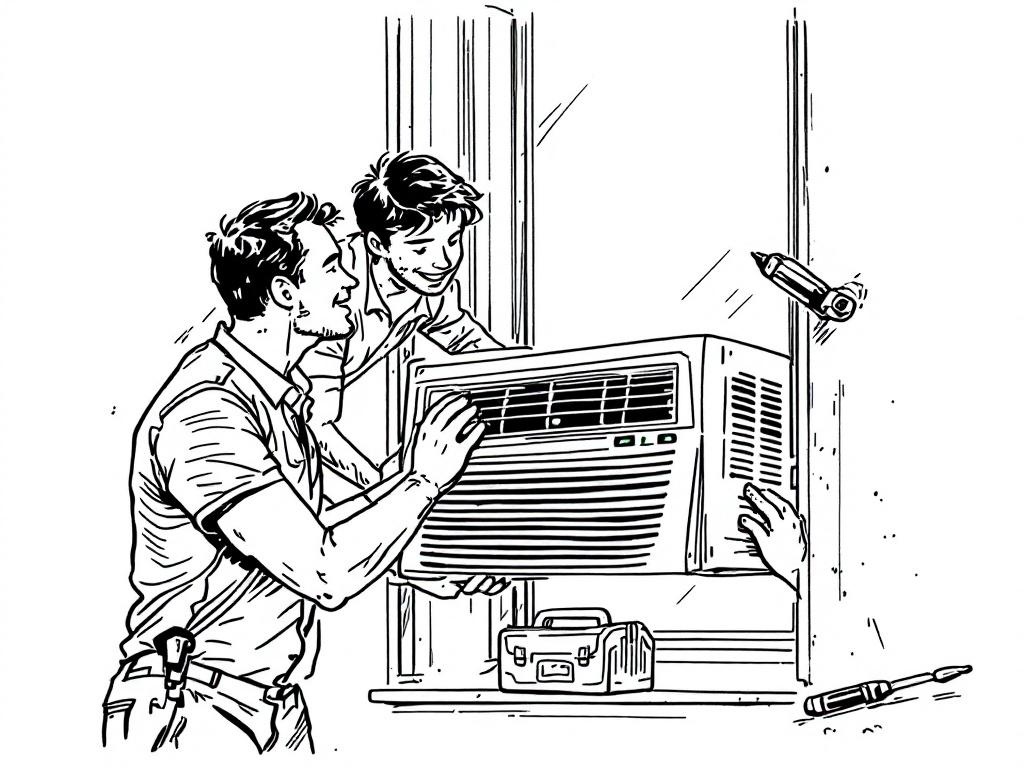
That's exactly the kind of thing I'm happy to help with at RVA Tech Help. No job too small. If you're in Forest Hill, Westover Hills or the surrounding neighborhoods and you need a hand getting a window unit in before the humidity hits, use my app once it's live to book a call. (I'm writing this in May 2026. Note: I can't do ladder work, and I can't lift medium-or-larger units by myself.)
And if you've been putting off a computer tune-up, hard drive upgrade or data migration, we can do both in one visit: get the AC unit mounted, swap in a new SSD, and while the data transfer runs, which can take a while, make sure everything is sealed up and cooling properly.
The Bottom Line
For most people in Richmond who just want to stop being miserable in summer, or who want to sleep in a properly cold room year-round, a window unit is the unsexy answer that has been sitting at Home Depot the whole time. And unlike the $3,000 mattress cover, it lowers what you hand Dominion every month, because you get to stop refrigerating the whole house overnight.
- Johanna
RVA Tech Help serves Forest Hill, Westover Hills, Carytown, and surrounding Richmond neighborhoods. Get in touch if you need a hand with tech, or with an air conditioner.